Flipping the Script: How Ariana Parrish Is Reimagining Access Through Nosreme Baltimore
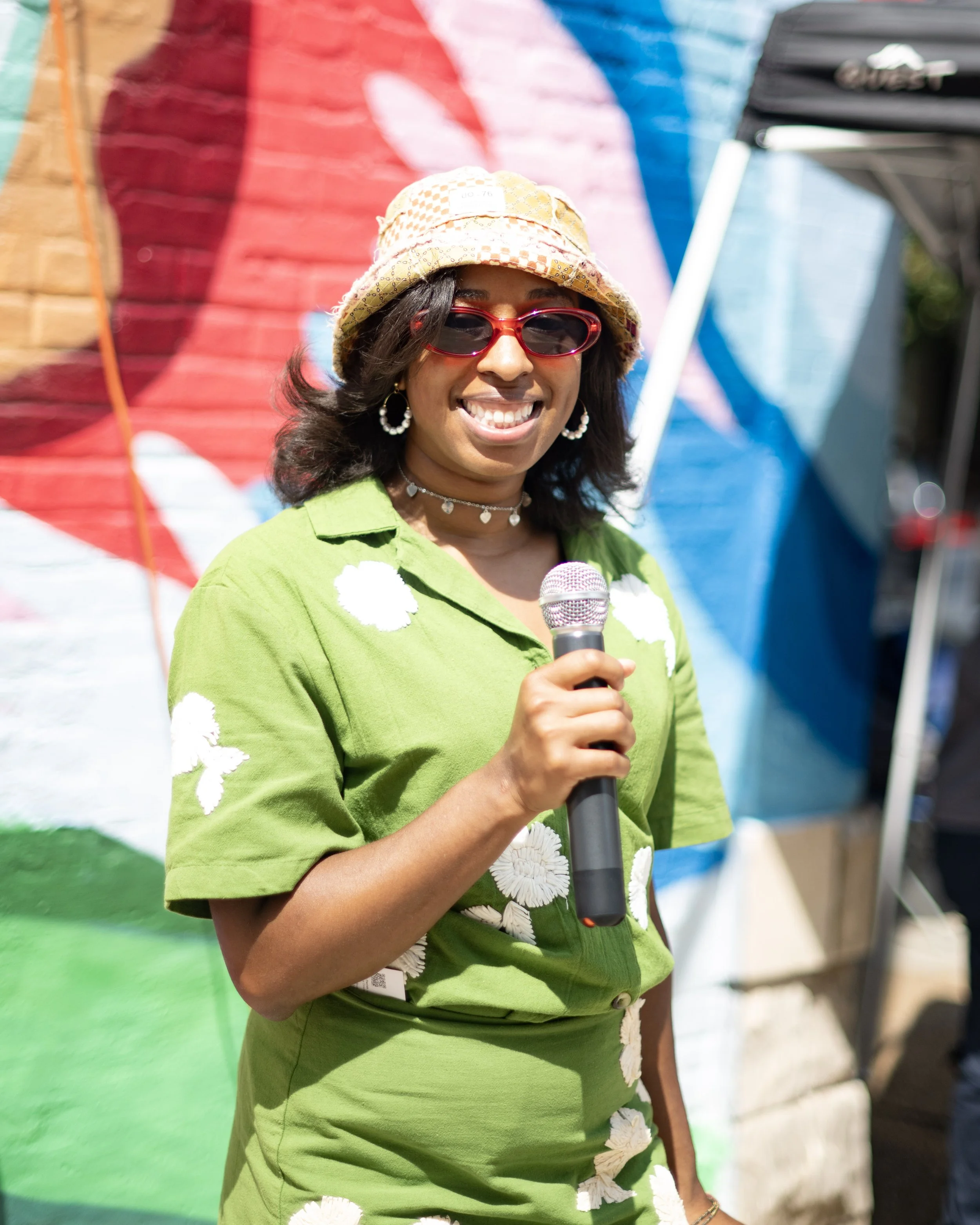
In a city known for its grit, brilliance, and undeniable soul, one founder is building more than an arts organization—she’s building infrastructure for equity.
For Ariana Parrish, Nosreme Baltimore is not just a nonprofit. It is a bridge. A catalyst. A reversal of systems that have historically limited who gets seen, funded, and celebrated on a global stage.
This is the story of how a middle school idea turned into a movement.
A Name Rooted in Self-Reliance—and Reimagined for Access
The name “Nosreme” began as a middle school project. It’s “Emerson” spelled backward—a nod to the teachings of Ralph Waldo Emerson and his philosophy of self-reliance.
But as Ariana grew into her career as an architect—traveling to more than 30 countries and witnessing global creative economies firsthand—the meaning evolved.
She realized something powerful:
For many Black and Brown artists in Baltimore, self-reliance isn’t the issue.
Access is.
Nosreme exists to flip that script.
Rather than forcing talented creatives to fight their way into elite residencies, international exhibitions, and major developments, Nosreme acts as the middle person—the connector between Baltimore’s raw talent and the world stage.
It’s not about telling artists to hustle harder.
It’s about redesigning the system so opportunity flows differently.
Why Baltimore?
Baltimore isn’t just a backdrop for Nosreme’s mission—it’s the epicenter.
As a native, Ariana has witnessed the city’s brilliance up close. Baltimore has long produced cultural icons who didn’t just participate in the arts—they reshaped them.
From the electrifying performances of Cab Calloway to the cultural impact of Tupac Shakur, the artistry of Amy Sherald, and the literary voice of Ta-Nehisi Coates, the city’s creative DNA runs deep.
Add to that the cinematic edge of John Waters, the expressive brilliance of Billie Holiday, and the boundary-pushing work of Joyce Scott—and one thing becomes clear:
Baltimore has always had the soul.
Nosreme provides the infrastructure to export that soul globally.
Equity Through Art: More Than a Phrase
When Nosreme speaks about “equity through art,” it isn’t symbolic language. It is operational strategy.
In practice, equity means flipping the power dynamic.
Art opportunities are often gated by pedigree, connections, or institutional affiliation. Too often, access depends on who you know—not what you can create.
Nosreme disrupts that model.
Equity, for Ariana, looks like creating a frictionless pathway—where a young artist from West Baltimore can see their work placed in a major development or international residency without navigating impossible barriers.
It means being the one who opens the door.
And then redesigns the hallway so it stays open.
Beautification as Civic Strategy
Nosreme’s work doesn’t stop at artist placement—it extends into neighborhood transformation.
By partnering directly with developers, the organization ensures that local artists are embedded into new city spaces. This isn’t decorative. It’s intentional.
When Baltimore’s skyline reflects Baltimore’s talent, the narrative shifts.
Visitors don’t just see buildings—they see culture. Identity. Pride.
There’s also a strategic layer to this work. By formalizing these opportunities and contributing to recognized arts metrics like SMU DataArts, Nosreme helps elevate Baltimore’s ranking as a thriving creative economy. Higher rankings attract more funding, more investment, and more attention—feeding back into the neighborhoods where the talent originates.
Art becomes economic infrastructure.
The Henrietta Lacks Project: A Defining Moment
Every founder can point to a moment that solidifies the mission.
For Ariana, it was the Henrietta Lacks project.
With her architectural background, she understood that community involvement couldn’t be an afterthought. It had to begin at the design phase. The community was not meant to be passive observers; they were co-authors.
Watching the Lacks family feel deeply honored and seeing the artist achieve a significant career milestone was transformative.
It affirmed a core truth:
When you flip the process—when you center the community and the artist first—the impact reverberates for generations.
From Creator to Executive: The Real Challenge
Building Nosreme has required Ariana to evolve.
The most difficult transition hasn’t been artistic—it’s organizational.
Moving from creator to executive requires a different muscle.
“I know that anything I set my mind to will happen,” she says, echoing Emerson’s philosophy of self-reliance. “But building a sustainable NGO requires an army.”
Scaling Nosreme now depends on assembling the right board and the right team—leaders who understand both impact and infrastructure.
As someone new to the nonprofit world, Ariana is learning the “business of impact” in real time. Governance. Funding. Strategy. Systems.
All while ensuring the heart of the mission remains intact.
That tension—growth without dilution—is the true work of visionary leadership.
Community as Co-Author
At the center of Nosreme’s design philosophy is one non-negotiable principle: community voice.
As an architect, Ariana rejects top-down design models. Instead, she prioritizes collaborative creation. When communities are involved from the beginning, they don’t just approve projects—they own them.
That ownership changes everything.
Artists feel the difference. Residents feel the difference. The work becomes more authentic, more permanent, and more powerful.
This is where the magic happens.
The Bigger Picture
Nosreme Baltimore is not simply placing artwork.
It is building pipelines.
It is engineering access.
It is redefining who gets to be called a global artist.
In a city bursting with brilliance, Nosreme stands as proof that talent has never been the issue.
Opportunity was.
And thanks to Ariana Parrish’s vision, that equation is being rewritten—one project, one partnership, and one flipped script at a time.
