What Baltimore Gains When It Invests in Artists
People travel to cities for what they can experience there.
A remarkable sculpture, mural, or installation can become part of that reason to visit. People seek it out, photograph it, tell other people about it, and spend time in the neighborhood around it. While they are there, they eat, shop, park, stay in hotels, and discover other parts of the city.
When public art becomes a destination, the value it creates extends well beyond the artwork.
Public Art Can Bring People to a City
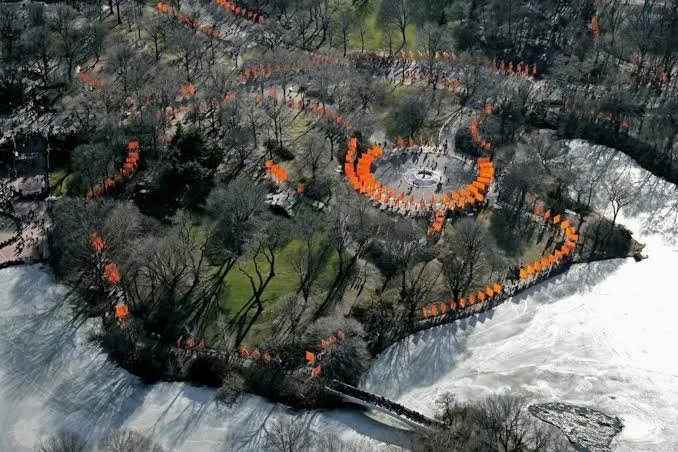
New York saw that impact on an extraordinary scale with Christo and Jeanne-Claude’s The Gates. The temporary installation filled Central Park with 7,503 saffron-colored gates for just 16 days in 2005. More than four million people visited the park during that period, generating an estimated $254 million in economic activity across New York City.
Baltimore has its own example.
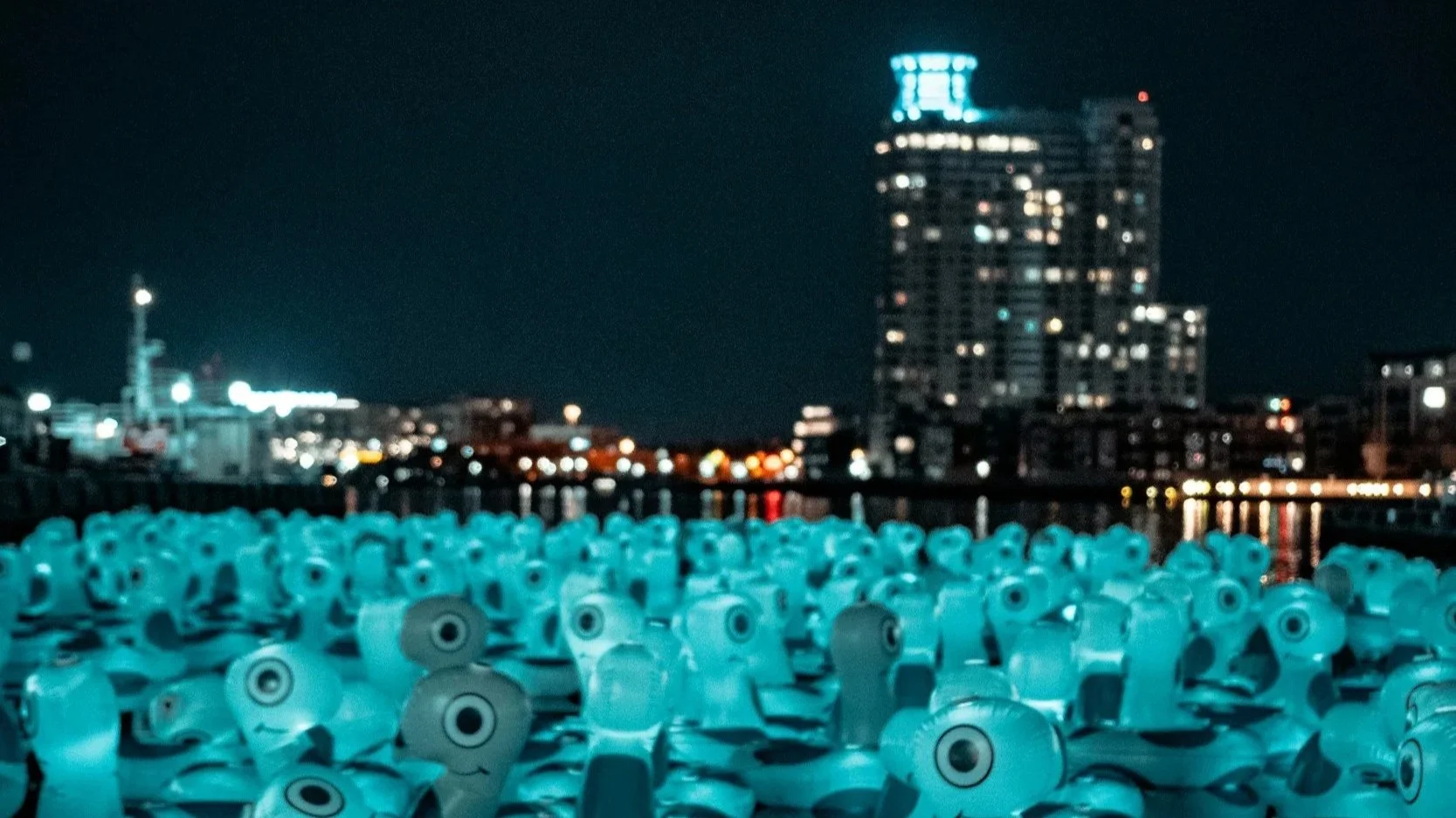
The inaugural Light City Baltimore brought illuminated public art, performances, and events downtown in 2016. More than 400,000 visitors attended, generating $19.9 million in direct spending and another $13.9 million in indirect economic impact.
Those visitors did not spend money on the artwork itself. They spent it in the city. Public art gave hundreds of thousands of people a reason to come downtown and experience Baltimore.
A Landmark Can Keep Drawing People Back
Temporary installations can create enormous bursts of attention. Permanent public art keeps working.
Chicago’s Millennium Park turned former railroad land and parking lots into one of the city’s best-known public destinations. Its most recognizable feature, Anish Kapoor’s Cloud Gate, or “The Bean,” has become an image people worldwide associate with Chicago.
The American Planning Association has cited the park’s architecture and public art as major contributors to its appeal. It estimates that Millennium Park has contributed more than $1.2 billion in tourism value.
People do not need a ticket to encounter Cloud Gate. They simply need to come to Chicago. Once they do, their visit becomes part of a much larger tourism economy.
That is the potential of permanent public art. A one-time commission can become something visitors seek out for years.
Baltimore Can Create More Reasons to Come
Tourism already matters enormously to Baltimore. In 2025, 28.7 million visitors generated more than $4.3 billion for the city’s economy.
Public art can give visitors more reasons to explore the city and more places to discover when they arrive.
Baltimore already has the artists, stories, neighborhoods, and public spaces to create work people could associate specifically with this city. More ambitious murals, sculptures, installations, and permanent commissions can turn those assets into experiences that draw attention to neighborhoods and bring visitors into nearby businesses.
That investment also gives Baltimore artists the opportunity to create significant work here instead of reserving their most ambitious projects for opportunities elsewhere.
Nosreme Baltimore connects artists with developers, institutions, communities, and other partners ready to create public art at that scale.
Partner with Nosreme to create a public art project that gives people more reasons to experience Baltimore.